
 English
 中文简体
Content
- 1 1. Are You the Mill, or a Trading Office?
- 2 2. Where Does the Cashmere Fiber Come From, and Can You Prove It?
- 3 3. What Is the Micron — and What Is the Staple Length Behind It?
- 4 4. How Do You Write the Count, and What Does Nm 2/48 Actually Mean?
- 5 5. Is the Yarn Worsted-Spun or Woollen-Spun?
- 6 6. How Do You Handle Dyeing, Lab Dips, and Shade Consistency?
- 7 7. Which Certifications Actually Apply to My Order?
- 8 8. What Does the Sampling Process Look Like?
- 9 9. How Do You Keep Consistency From Lot to Lot?
- 10 10. What Are the Real MOQ and Lead-Time Numbers?
- 11 Putting Price in Its Place
Most sourcing conversations open with a number. Ours usually open about twenty minutes later. Over the years we have sat on both sides of the table, and the pattern is always the same: the buyers who ask the technical questions first are the ones who come back for a second order, and the ones who lead with price are the ones who discover problems at the knitting machine. A cashmere yarn quote is only meaningful once you know what is actually inside the cone, how it was spun, and what happens when the shade is not quite right.
So here is the list we would hand to any brand, knitter or garment maker starting a new cashmere project. Ask these ten things before the price conversation begins, and by the time you get to cost per kilo, you will be comparing apples to apples.
1. Are You the Mill, or a Trading Office?
This is the question that quietly determines everything else. A trading office can quote beautifully and still have no idea why a batch of Nm 2/60 came off the frame slightly dry. Ask who owns the spinning frames, who sets the draft ratios, and whether you can see the floor where your yarn will be made. If the answer involves a partner factory you will never visit, your quality conversation is happening with a middleman.
We are a spinner, not a broker. Our factory in Zhejiang runs 15,000 spindles on Italian and German equipment, and customers are welcome to walk it with us before placing a first order.
2. Where Does the Cashmere Fiber Come From, and Can You Prove It?
Cashmere is one of the few fibers where origin genuinely changes the hand of the finished garment. Ask which seasonal clip the fiber comes from, whether it is combed or pulled, and whether the mill keeps incoming lot records that tie a yarn batch back to a fiber lot. Then ask for documentation: a Responsible Wool Standard or similar chain-of-custody certificate is only useful if its scope covers the product you are buying.
Traceability is not paperwork for its own sake. When something goes wrong six months later, a mill that can retrieve its fiber records can tell you in an hour whether the issue was the raw material, the spinning, or the dye bath.
3. What Is the Micron — and What Is the Staple Length Behind It?
Buyers love micron figures because they are easy to compare, but micron alone is half a story. A 15.5 micron fiber with a short staple will pill sooner than a 16.5 micron fiber with a long one. Ask for both numbers, and ask how the mill measures them — laboratory testing on incoming lots, or a supplier's claim on a spec sheet.
Our fine-gauge work sits mostly between 13.5 and 16.5 micron. Some qualities, such as our
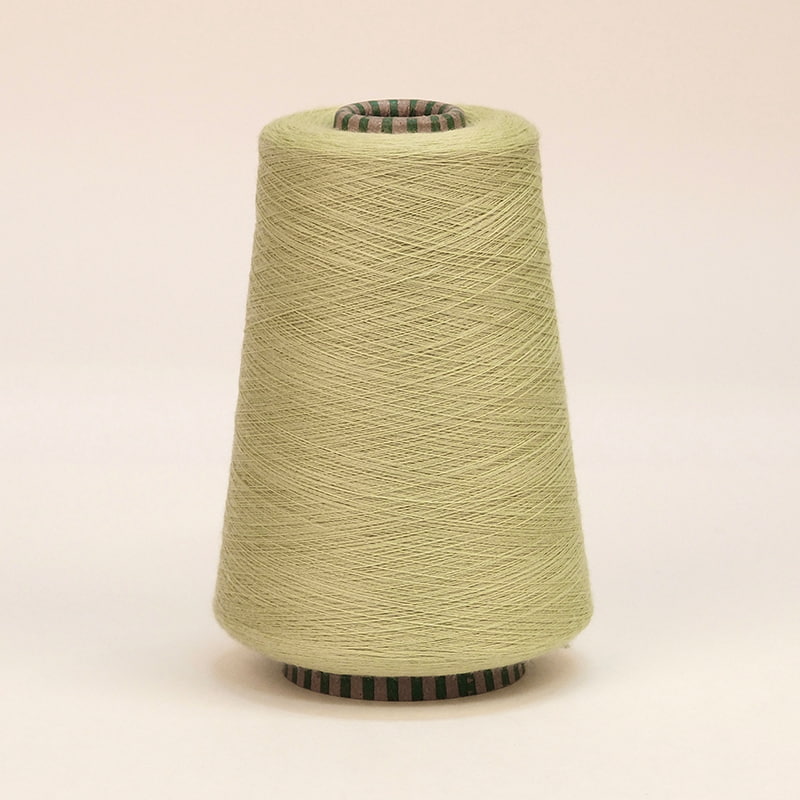
 OPAL Extra-Fine Anti-Shrinkage Merino YarnA 13.5-micron extra-fine Merino yarn in Nm 2/80 and 3/80, with anti-shrinkage treatment relevant to machine-wash questions for high-end knitwear.View Product →
, combine an extra-fine fiber with an anti-shrinkage treatment, which is worth asking about separately if your garment will be machine washed.
4. How Do You Write the Count, and What Does Nm 2/48 Actually Mean?
Metric count confuses almost everyone the first time. The first figure is the number of plies, the second is the single's count, so Nm 2/48 means two plies of a 48 Nm single, giving roughly 24 metres per gram in the folded yarn. A mill that can explain this clearly in one email is usually a mill that will explain a production delay clearly too.
Reading counts side by side
| Count | What it tells you | Typical use |
|---|---|---|
| Nm 2/48 | Two plies of a 48 Nm single, about 24 m per gram folded | Classic cashmere knitwear |
| Nm 2/60 | Finer single, lighter fabric, softer surface | Fine-gauge sweaters |
| Nm 3/68 | Three plies, rounder yarn, strong stitch definition | Ribs and structured knits |
| Nm 2/80 | High count, needs careful tension control on the machine | Lightweight premium garments |
| Nm 2/120 | Very fine, around 60 m per gram folded | Ultralight scarves, circular knitting |
A good reference point is a plain 100% cashmere yarn in the classic range, such as our
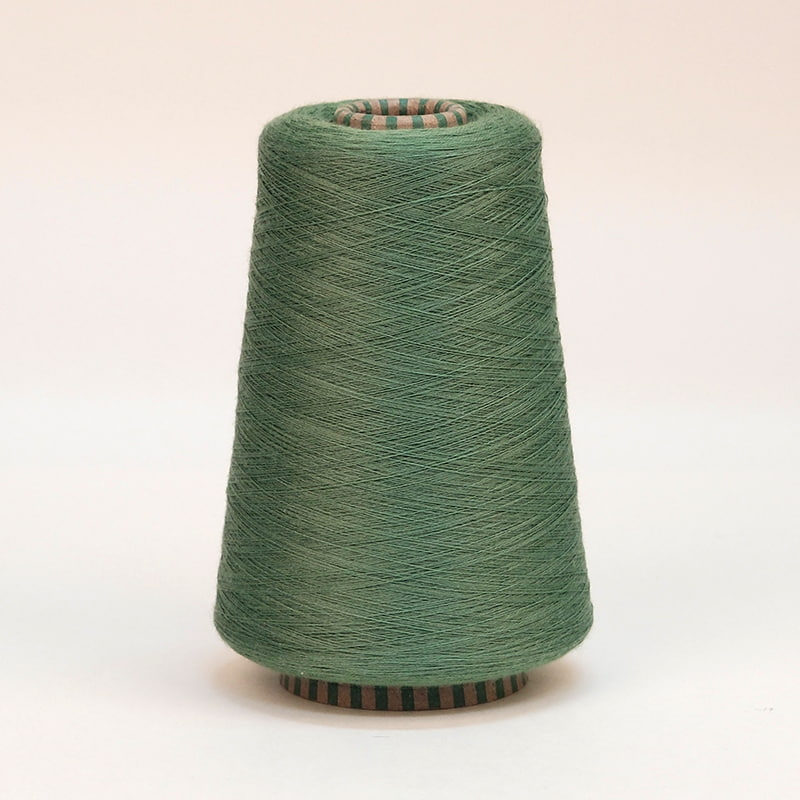
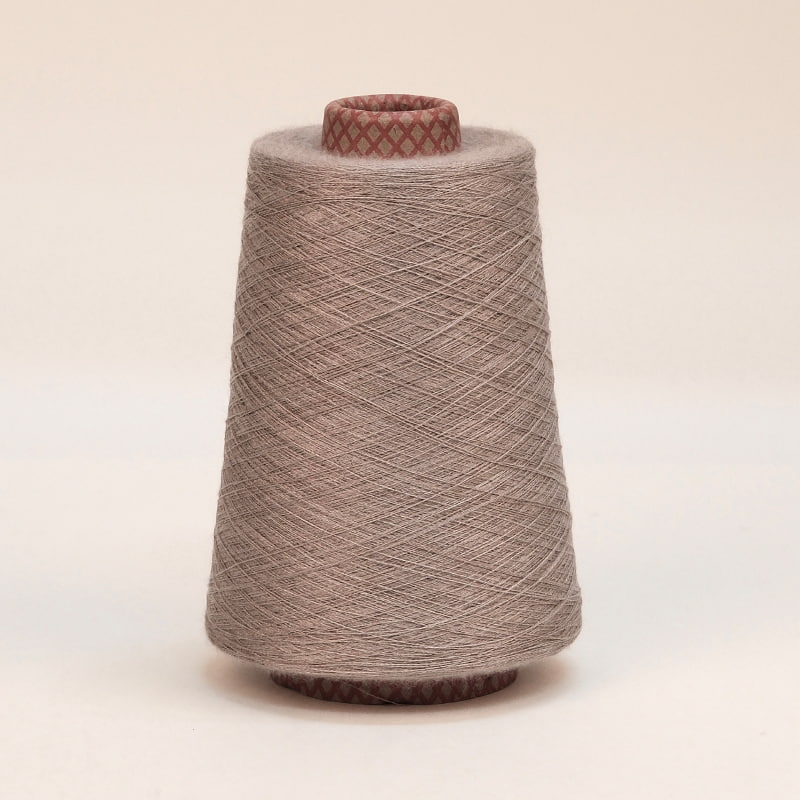 JADE 100% Cashmere Worsted YarnA 100% cashmere worsted yarn in multiple counts, with fine fibres and a smooth, delicate handle for comparing gauge behavior.View Product →
, which runs across three counts so you can feel how the same fiber behaves at different gauges.
5. Is the Yarn Worsted-Spun or Woollen-Spun?
These two routes produce genuinely different yarns from the same fiber. Worsted spinning combs the fibers parallel before drafting, giving a smooth, strong, clean-surfaced yarn with good stitch definition. Woollen spinning keeps more air and loft, for a softer, fuzzier, warmer fabric that pills more readily. Neither is better; they answer different design questions.
Ask which route your sample was spun on, because a quote from a woollen spinner is not comparable to one from a worsted spinner, even at the same micron and count.
6. How Do You Handle Dyeing, Lab Dips, and Shade Consistency?
Color is where most first orders quietly go sideways. Ask whether dyeing happens in-house or at a commission dyer, how many lab dips you get before approval, and what tolerance the mill works to between the approved dip and bulk. Then ask the harder question: what happens if the bulk arrives half a shade off — who absorbs the cost?
It also helps to know whether the mill holds stock shades. Our shade cards cover several seasonal collections, and working from a stocked shade removes both the dipping time and the risk of a mismatch, at the cost of a narrower palette.
7. Which Certifications Actually Apply to My Order?
A certificate on a website proves very little. Ask for the certificate number, the issuing body, the expiry date, and — most importantly — whether the scope covers the specific product and process you are ordering. A mill can hold OEKO-TEX STANDARD 100 and still sell you a blend that was never included in the tested range.
If your product involves blends, this is also the moment to ask how blend ratios are controlled on the floor. A 55% silk / 45% cashmere yarn, for instance, should be traceable through the mixing records rather than simply labeled. Our
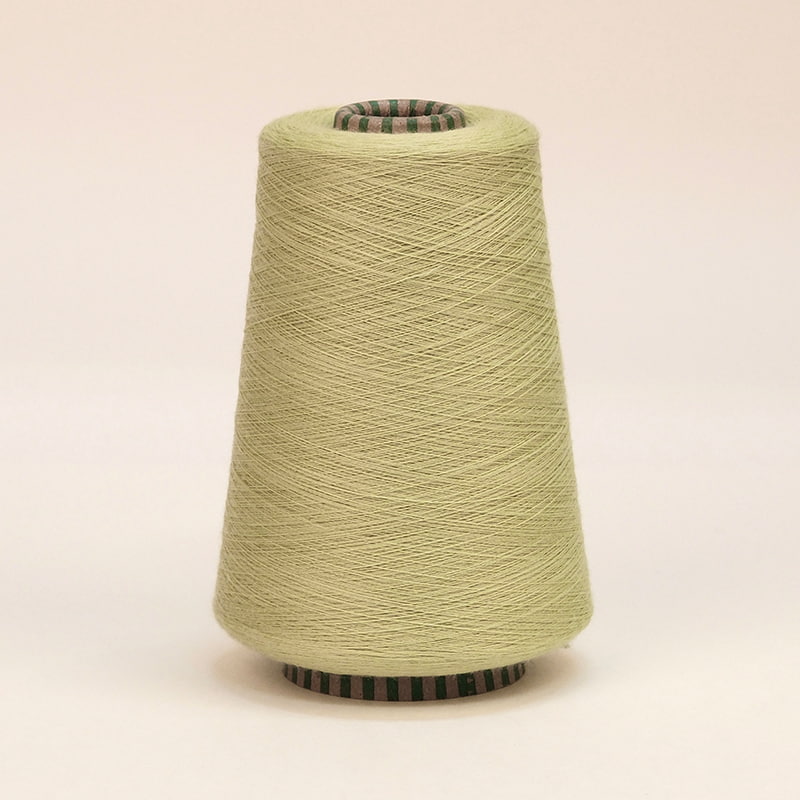
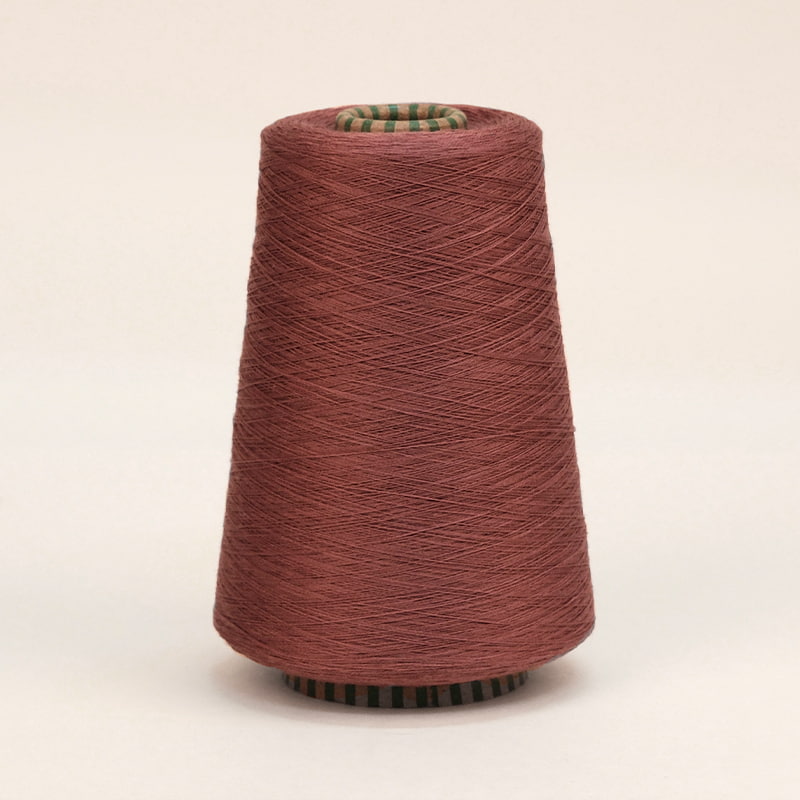 JODIE 55% Silk 45% Cashmere Blend YarnA 55% silk / 45% cashmere yarn in Nm 2/48 and 2/60, with a bright, draped, skin-friendly handle and a tightly specified blend ratio.View Product →
is one example of a ratio we hold to tightly across lots.
8. What Does the Sampling Process Look Like?
Ask what you actually receive: a hank, a cone, a knitted swatch, or a dyed sample on your own base yarn. Ask how long each stage takes and what it costs, and whether the sample charge is credited back against the bulk order. A mill that sends only a hank is asking you to imagine the fabric; a mill that sends a finished swatch is showing you the fabric.
9. How Do You Keep Consistency From Lot to Lot?
Your second order will not be spun from the same fiber lot as your first, and that is normal. What matters is how the mill manages the difference. Ask about incoming lot testing, whether fiber lots are blended for continuity, and what records are kept for twist, count and elongation. Ask, too, whether they will hold a reference sample of your approved yarn so future lots can be checked against it.
10. What Are the Real MOQ and Lead-Time Numbers?
Generic figures are worse than useless. Ask for minimum order quantity and lead time written out for your specific count, shade and fiber composition, and ask what happens if the shade is out of stock or the fiber has to be specially sourced. Then ask for the same numbers again in writing on the quotation. We would rather put a precise date on a document than a friendly estimate in an email.
Putting Price in Its Place
Once you have those ten answers, the quote in front of you is no longer a number floating in isolation — it is attached to a fiber source, a spinning route, a count, a certification scope and a delivery date. That is when price comparisons become honest, because you can see exactly what each mill is including and what it is leaving for you to discover later.
Before you commit, a short checklist worth keeping on file:
- Mill ownership and where the spinning actually happens
- Fiber origin, micron and staple length, with records
- Count, ply structure and spinning route
- Dye method, lab dip rounds and shade tolerance
- Certificate scope and validity for your product
- Sampling deliverables, MOQ and lead time in writing
We have been spinning worsted cashmere and fine merino since 2000, and we still enjoy this part of the conversation most. If you would like to walk through these questions with someone who will be on the floor when your yarn is made, we are always glad to talk it through.