
 English
 中文简体
Content
Every so often a sample lands on the table that seems to defy the arithmetic: a scarf that weighs almost nothing, folds into the palm of a hand, and still springs back when you stretch it. When customers ask how such a yarn is even possible, the honest answer is that it was never spun alone. A fine cashmere or merino yarn at Nm 2/100 borrows strength from a partner that will not be in the finished scarf at all. We call that partner the invisible skeleton, and it is one of the quiet reasons ultra-light scarf yarn exists as a commercial product rather than a laboratory curiosity.
What the Invisible Skeleton Actually Is
The skeleton is polyvinyl alcohol, usually supplied as a fine water-soluble filament and known across the trade simply as PVA. On the spinning frame it is fed alongside the animal fibre or blended into the roving so that the two are twisted together into a single, surprisingly strong yarn. In that state the PVA behaves like a core: it takes most of the tension during drafting, spinning, winding, warping and knitting, while the cashmere or merino rides along on the outside where it belongs.
Once the fabric or the knitted scarf panel is formed, the job is done. Warm water dissolves the PVA and carries it away, leaving the animal fibre in a structure it could never have held on the machine by itself. What the consumer touches is pure cashmere or pure merino; what made it possible was a temporary partner that has already left the building.
Why Fine Fibres Need a Temporary Partner
Anyone who has tried to spin short, fine animal fibre at very high counts knows the problem. A 100 Nm single of cashmere is roughly ten tex, which means a kilometre of it weighs about ten grams. At that fineness the fibres are few in the cross-section, and strength has to come from twist. But twist is exactly what we do not want in a scarf: too much of it and the fabric loses the soft, dry hand that justified the cashmere in the first place.
PVA breaks that trade-off. Because the filament carries load, the animal fibre can be spun with less twist, gentler drafting and a lower break rate, so the yarn keeps its softness and its surface stays clean. The partner earns its place in several ways:
- It carries tensile load through spinning and winding, so fine singles break far less often.
- It allows a lower twist multiple, which preserves the natural loft of cashmere and fine merino.
- It smooths the yarn surface, cutting hairiness and reducing abrasion on knitting needles and loom reeds.
- It keeps the yarn round and even, so stitch definition and gauge stay predictable across a long production run.
- It disappears cleanly when the finisher does their part, adding nothing to the finished handle.
Three Ultra-Light Routes Side by Side
Not every ultra-light scarf needs a skeleton. The choice usually comes down to how fine the yarn must be and how much strength the fibre can supply on its own. The table below compares the routes we spin most often for scarf programmes.
| Yarn route | Composition | Count | PVA in the yarn | What finishing does |
|---|---|---|---|---|
| Cashmere scarf yarn | 50% cashmere / 50% PVA | Nm 2/100 | Yes | Dissolves the PVA in hot water; the remaining cashmere sits close to an Nm 2/200 linear density |
| Merino scarf yarn | 50% ultra-fine mercerized merino, 16.5 micron / 50% PVA | Nm 2/100 | Yes | Same dissolution step, with the mercerized fibre giving a cooler, crisper surface |
| Cashmere and silk scarf yarn | 70% cashmere / 30% silk | Nm 2/120 | No | No dissolution needed; the silk component supplies the tensile strength that PVA would otherwise provide |
The half-and-half figure is worth pausing on. When half the yarn's mass leaves in the bath, the fabric becomes roughly half as heavy as the greige would suggest, and the remaining fibre is effectively far finer than the nominal count implies. That mass loss is also why a scarf programme built on PVA has to be costed and designed from the finished state backwards, not from the yarn ticket forwards.
Where the Skeleton Leaves
Dissolution is a finishing decision, not a spinning one, and it is where most PVA projects succeed or fail. The scarves or panels go into a hot water bath, typically somewhere between 60 and 90 degrees Celsius with mild agitation, and the PVA passes into the water. Rinsing, drying and a light mechanical action afterwards open the fabric up and settle the handle. Mills that run the process daily treat it as routine; mills that try it once often end up with stiff patches and blame the yarn.
Three practical points matter. First, water temperature and dwell time need to be validated on the actual fabric weight, because a dense panel releases PVA far more slowly than an open knit. Second, the PVA-laden effluent has to go through the plant's wastewater system rather than straight to drain, which is why we ask customers to confirm their treatment arrangements before we ship. Third, dyeing is usually planned around the dissolved weight, since removing half the mass changes depth of shade considerably. Testing for residual PVA belongs in the quality protocol, and certifications such as OEKO-TEX STANDARD 100 give buyers a framework for those checks.
What to Check Before You Commit
When a customer evaluates a PVA-assisted scarf yarn for the first time, we suggest a short, structured trial rather than a full production run. It saves a great deal of time later.
- Confirm dissolution completeness on a knitted swatch, not on a hank of yarn; the fabric geometry changes everything.
- Feel for residual stiffness at seams, hems and doubled selvedges, where liquor exchange is slowest.
- Measure dimensional change before and after the bath, then again after the first domestic wash.
- Check shade against the lab dip after dissolution, not before, so the colour reference reflects the real fibre mass.
- Run a pilling and abrasion test, since the low-twist structure that makes the scarf soft also makes it vulnerable.
- Review the effluent route for the PVA bath with the finishing partner, in writing.
Matching the Yarn to the Scarf You Intend to Make
If the priority is the softest possible hand and the budget can carry a high-grade fibre, the cashmere route is difficult to beat; it is the version most often chosen for luxury accessories where weight is the visible selling point.
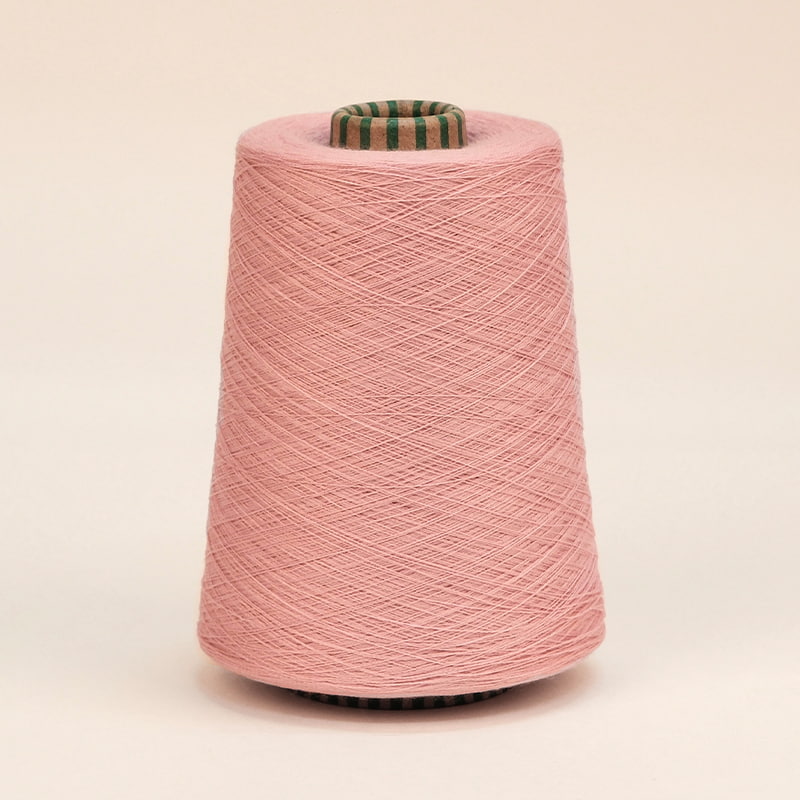
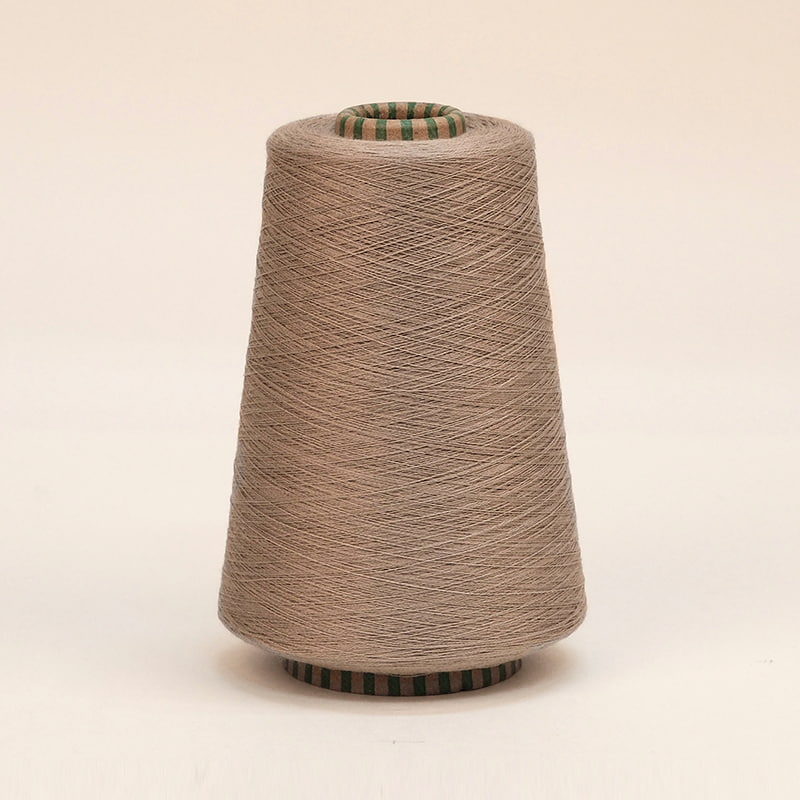
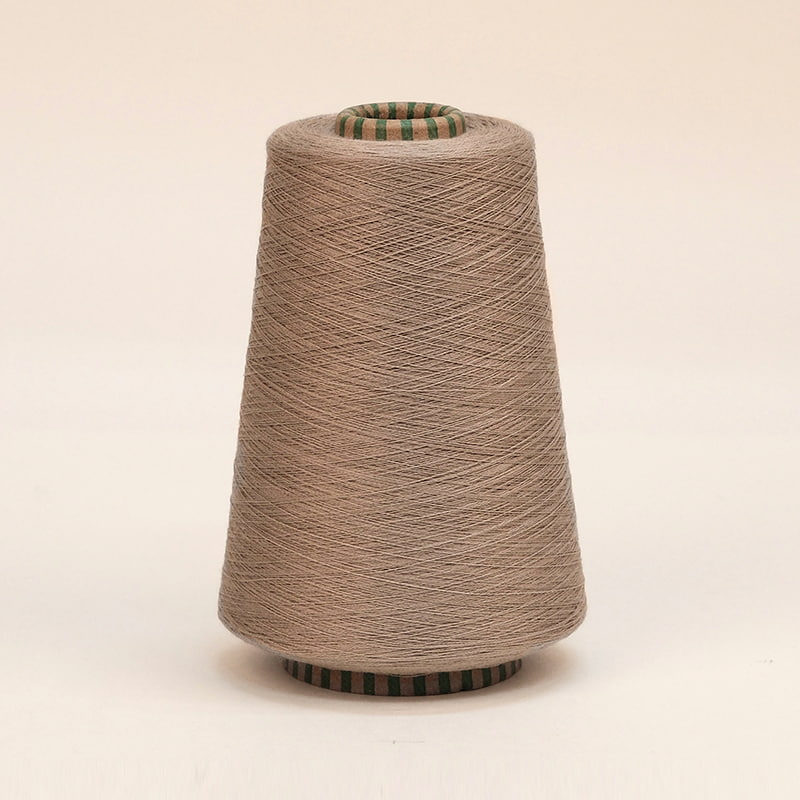 ELLIE 50% Cashmere 50% PVA Scarf YarnAn ultra-light Nm 2/100 cashmere-PVA scarf yarn for soft, warm, skin-friendly accessories where maximum hand feel is the priority.View Product →
If the scarf needs to survive daily wear, hold its shape on a hanger and stay within a tighter price band, the mercerized merino route at Nm 2/100 offers a crisper surface and excellent colour clarity after dissolution.
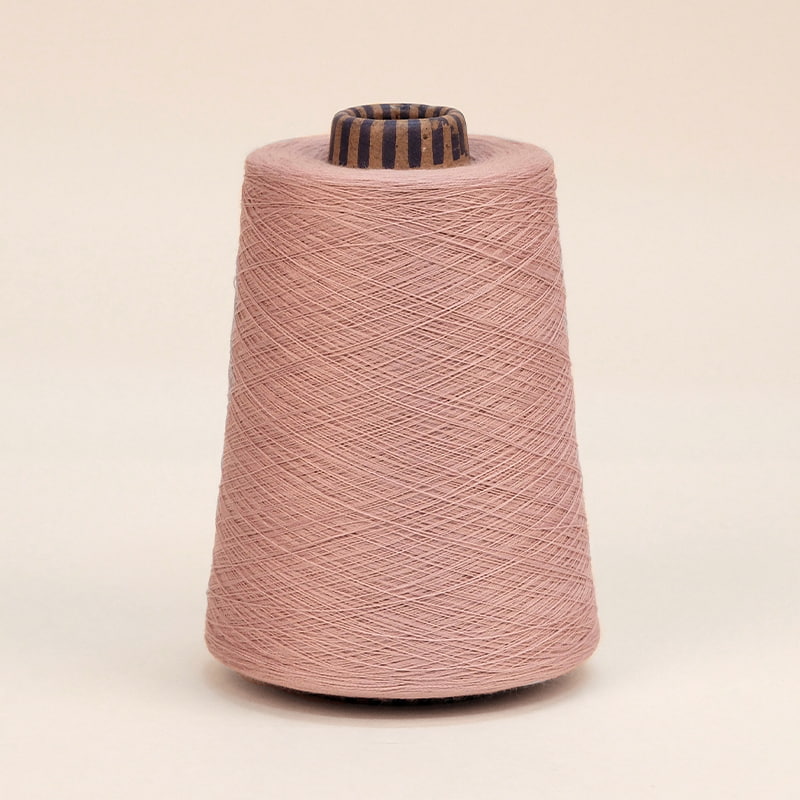
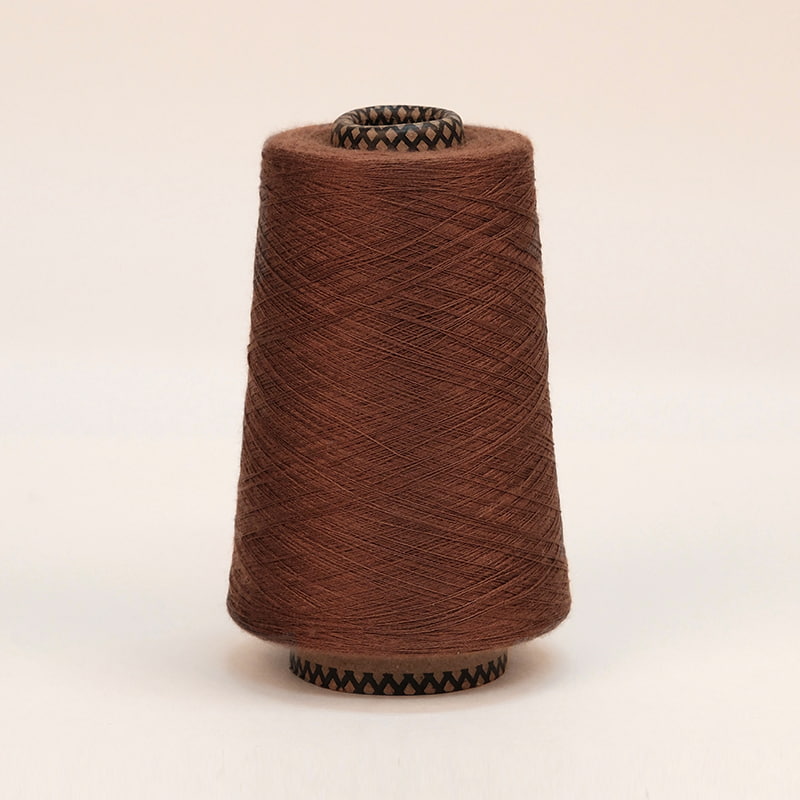
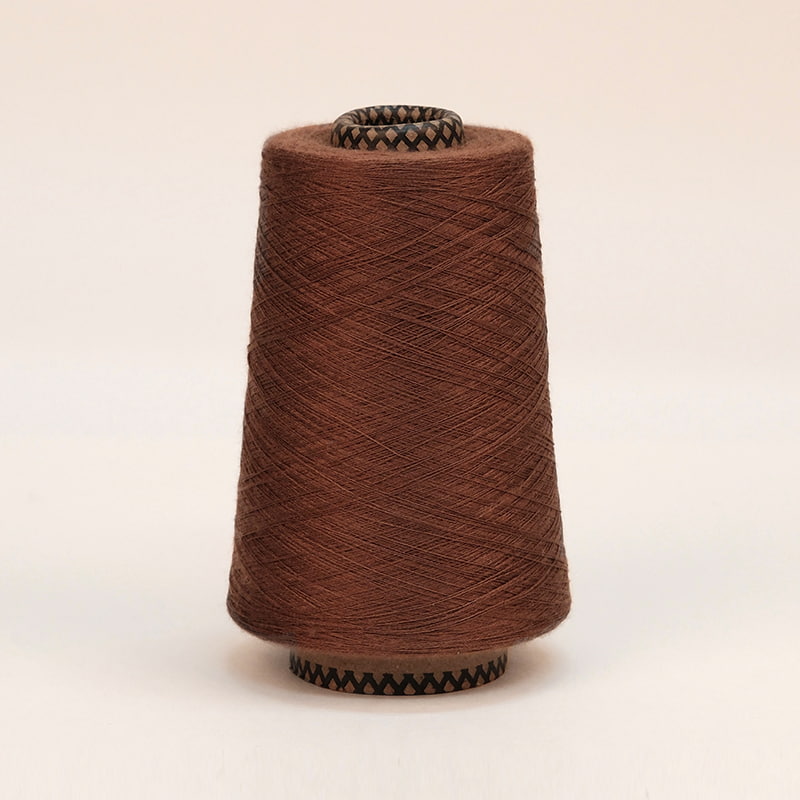 DORIS 50% Mercerized Merino 50% PVA YarnA crisp, ultra-light Nm 2/100 merino-PVA scarf yarn for daily-wear accessories needing shape retention and clear colour after dissolution.View Product →
And if the finishing line simply cannot accommodate a water bath, the cashmere and silk route at Nm 2/120 reaches a comparable sense of weightlessness through a different mechanism: silk contributes strength and drape, so no skeleton is required at all.
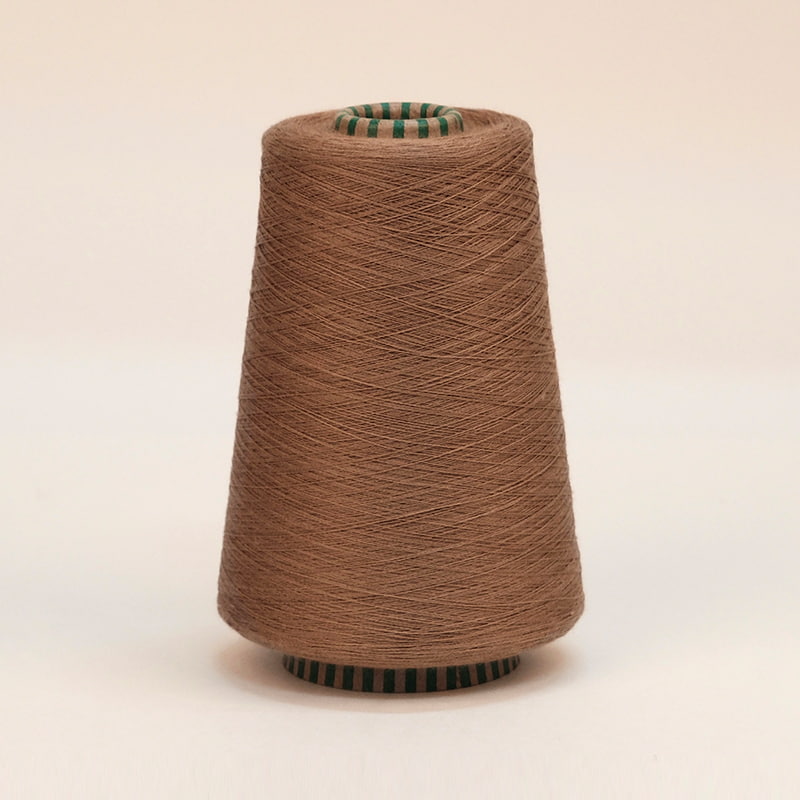
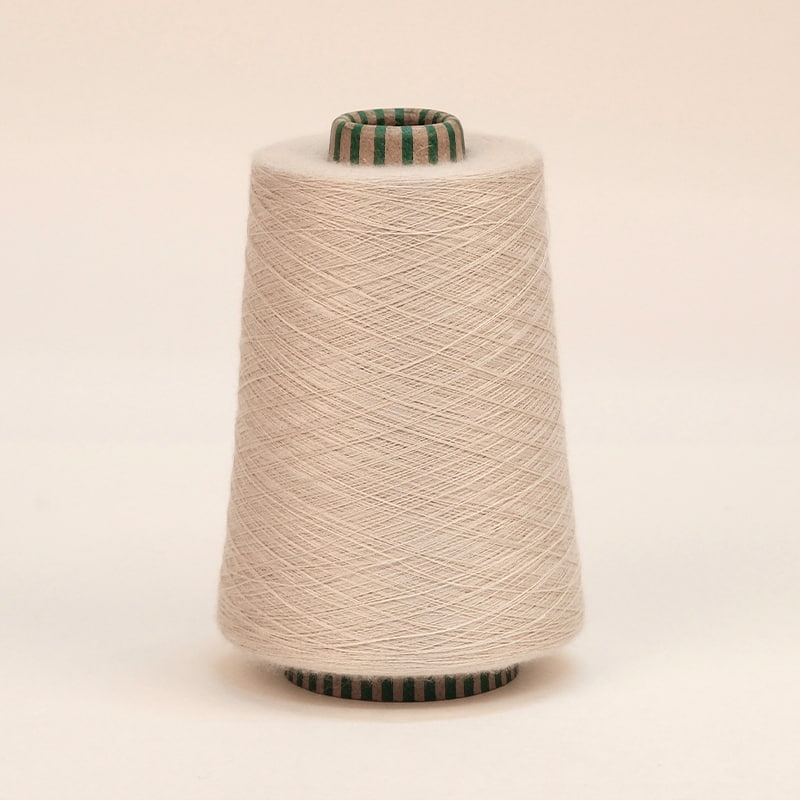 CLARA 70% Cashmere 30% Silk Scarf YarnA lustrous Nm 2/120 cashmere-silk scarf yarn for large-scale prints, offering vibrant dye uptake, drape and a skin-friendly feel without a water bath.View Product →
A Spinner's Part of the Work
Yarns like these live or die in the spinning mill. Consistency in fibre selection, filament tension and twist control is what allows a Nm 2/100 cashmere and PVA yarn to behave the same way on a Tuesday as it did in the sample room six months earlier. Our mill in Zhejiang has been spinning worsted animal fibre since 2000, with 15,000 spindles, Italian and German equipment, and a product range that runs from pure cashmere and ultra-fine merino to silk blends and the ultra-light scarf yarns discussed here. You can see the full range on our yarn product pages, and we post mill and development updates on the news page.
We work under ISO 9001, ISO 14001 and OHSAS 18001, hold OEKO-TEX STANDARD 100 and Responsible Wool Standard certification, and our pure cashmere and pure wool worsted yarns have been recognised as national green design products. That matters more than usual with PVA, because a water-soluble partner is only as good as the mill's discipline about what happens to it afterwards.
Ultra-light scarf yarn is not a trick, but it is a partnership with a deadline. The PVA does the hard work that fine cashmere cannot do alone, and then it is gone, leaving a fabric that feels as though it was never engineered at all. If you are developing a scarf programme and want to talk through counts, dissolution trials and the fibre that will remain, our team is always glad to sit down with a sample in hand.