
 English
 中文简体
Content
- 1 The Short Answer: It Depends on the Other 90%
- 2 What 10% Cashmere Actually Contributes
- 3 The Value Tipping Point, Ratio by Ratio
- 4 When 10% Cashmere Makes Sense, and When It Does Not
- 5 Three Variables That Decide Whether 10% Is Enough
- 6 How We Approach a 10% Cashmere Brief
- 7 How to Test the Claim Before You Commit
Walk through any yarn fair or knitwear showroom and you will see the same phrase doing a great deal of quiet work: cashmere blend. Sometimes the number behind it is 30%, sometimes it is 5%, and sometimes the cashmere exists mainly to justify a hangtag. So when a buyer asks us whether 10% cashmere is worth it, the honest answer is that the percentage alone tells you almost nothing. What matters is what the other 90% is doing, and whether the precious fiber is positioned where a hand can actually feel it.
We have spent more than two decades spinning worsted yarns in Zhejiang, working with cashmere, extra-fine merino and silk across counts from Nm 2/48 up to Nm 2/120. That experience has given us a fairly unsentimental view of blend ratios. This article is our attempt to answer the 10% question the way we would answer it across a sample table, with fiber numbers, swatches and a healthy dose of skepticism.
The Short Answer: It Depends on the Other 90%
Ten percent cashmere is worth the premium when three conditions line up. First, the base fiber has to be fine enough that cashmere is an upgrade rather than a rescue. A 10% addition to a 19.5 micron merino gives you a noticeably softer surface; the same 10% added to a coarse, scratchy wool is like putting a silk ribbon on a burlap sack. Second, the yarn has to end up against skin, in a scarf, a light knit, a base layer or a fine-gauge pullover. Third, the price premium has to stay proportionate, roughly in the range a customer will accept for a perceptible improvement rather than a transformative one.
Flip any of those conditions and the answer changes. On a heavy outerwear fabric, at a coarse count, or behind a markup that treats 10% cashmere as if it were 100%, the percentage is decoration rather than value.
What 10% Cashmere Actually Contributes
Cashmere is valuable for a simple physical reason: its fibers are fine, typically in the 14 to 16.5 micron range, with a smooth cuticle and a soft crimp. Fine merino sits not far behind at 13.5 to 19.5 micron, which is exactly why the two fibers blend so naturally and why the gap between them is narrower than marketing suggests.
In a worsted blend, the finer cashmere fibers tend to migrate toward the surface during carding, spinning and later wear. At 10%, there are enough of them to soften the skin-contact surface and take the edge off any residual prickle, but not enough to change the drape, the weight or the insulation of the fabric in any meaningful way. You are buying hand-feel, a slightly warmer luster after finishing, and a marginally better story on the label. You are not buying warmth or a dramatic upgrade in luxury.
That is not a small thing. For a next-to-skin garment, surface softness is often the single attribute a customer notices within five seconds of trying it on, which is precisely why 10% can be a very efficient place to spend money.
The Value Tipping Point, Ratio by Ratio
The table below reflects how we read blend ratios across our own sample library. It is a rule of thumb from mill experience, not a laboratory standard, and the sensory jump between two ratios depends heavily on fiber diameter and yarn structure.
| Cashmere share | What you notice | Cost position | Where it earns its keep |
|---|---|---|---|
| 3% to 5% | Barely detectable; mostly a label claim | Minimal uplift | Mass-market knits where price is the deciding factor |
| 10% | Clear softness at the surface, better next-to-skin comfort | Moderate, easy to justify | Scarves, fine-gauge knitwear, base layers |
| 20% to 30% | Noticeable loft, halo and drape; reads as luxury | Substantial | Premium sweaters, gift-level accessories |
| 50% and above | Approaching pure cashmere character | Steep, close to pure | Hero pieces where cashmere is the story |
| 100% | Full cashmere hand, warmth and fragility | Highest | Signature products with careful wear and care |
The economic logic behind the curve is straightforward. Cashmere typically costs several times what fine merino costs per kilogram, so each additional percentage point adds a disproportionate amount to the yarn price. The 0 to 10% step buys the most perceived improvement per dollar because it targets the surface, which is where perception lives. The 10 to 30% step buys a real but narrower gain in drape and loft. Past 30%, you are largely paying for the word rather than the hand.
When 10% Cashmere Makes Sense, and When It Does Not
Across our sampling work, the 10% ratio performs best in the following situations:
- Fine-gauge knitwear and lightweight sweaters where the fabric touches the neck and wrists.
- Scarves and shawls, especially at fine counts where the yarn has a soft halo after finishing.
- Base layers and travel knits, where softness matters more than abrasion resistance.
- Brands entering the cashmere category who need a credible hand at a mid-market price.
- Blends where silk or a fine anti-shrink merino provides the strength the cashmere cannot.
It performs poorly in these cases:
- Heavy outerwear and high-abrasion areas such as cuffs, elbows and upholstery-adjacent textiles.
- Coarse wool or acrylic bases, where the cashmere is outnumbered by fibers that feel rougher.
- Socks and hard-wearing accessories, where low abrasion resistance shortens the garment's life.
- Products priced as though the blend were pure, which invites returns and reputation damage.
Three Variables That Decide Whether 10% Is Enough
1. The Base Fiber's Diameter
A 10% addition to 17.5 micron merino is a refinement. The same 10% on top of 23 micron wool is a marketing exercise. Ask for the micron value of the base, not just the blend ratio. If a supplier cannot state it, the cashmere is probably doing cosmetic work.
2. Yarn Count and Structure
At a fine count such as Nm 2/60 or Nm 2/80, there are fewer fibers in the yarn cross-section and each one contributes more to the visible surface, so the cashmere reads more clearly. At a coarser count, the same 10% disappears into the bulk. Two-ply structures also behave differently from single-ply, and a tightly twisted worsted yarn releases less surface hair than a soft-spun one.
3. Finishing and Dyeing
Mercerized, Basolan-treated and anti-shrink merino bases accept the cashmere differently. A well-controlled milling or washing stage raises the halo and softness; an aggressive one compacts the fabric and erases the advantage. Dyeing temperature matters too, since cashmere loses some of its loft if it is pushed too hard.
How We Approach a 10% Cashmere Brief
When a customer asks for a 10% cashmere blend, our first question is what the garment will do to the yarn. If the answer involves skin contact at a fine gauge, our standard route is a mercerized merino base combined with 10% cashmere at Nm 2/48 or Nm 2/60, spun on our Italian and German worsted equipment. The mercerized merino supplies the strength and the clear, even color, while the cashmere softens the surface without pushing the price into a category the product cannot support. You can see the specification on our mill's yarn range if you want to compare counts side by side.
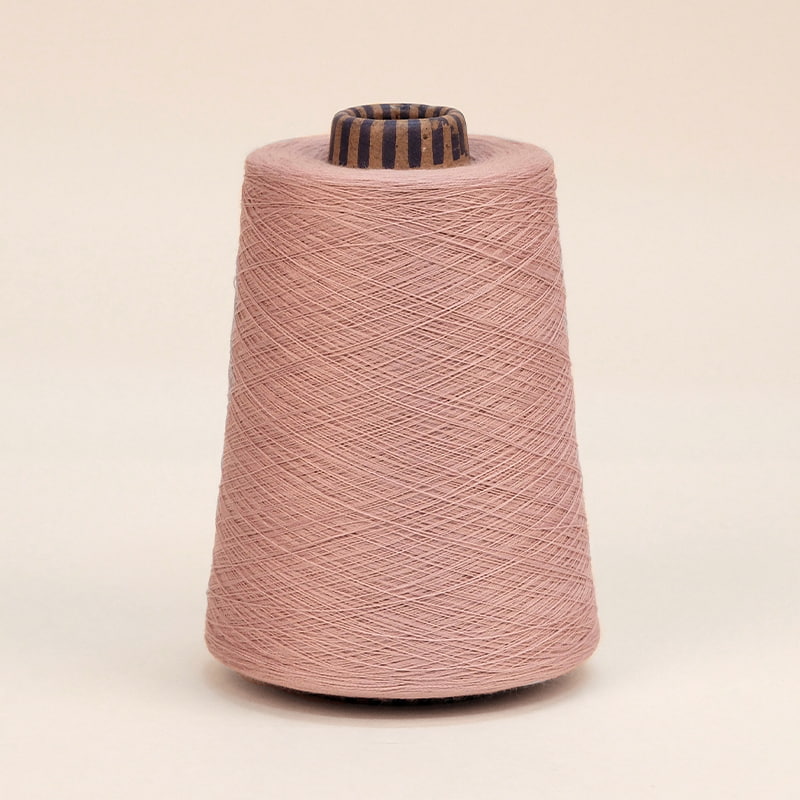
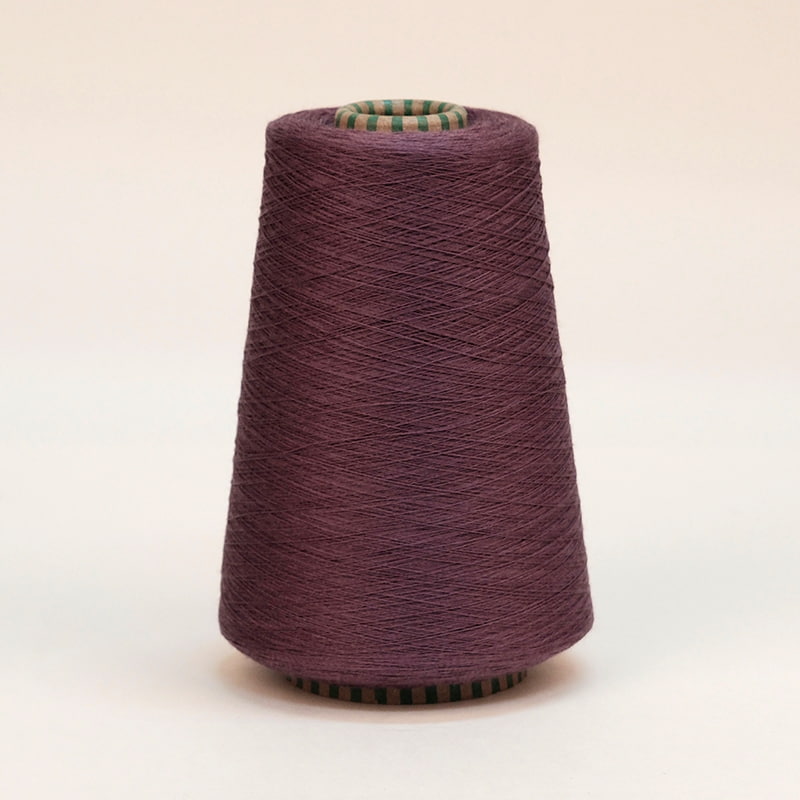 VENUS 90/10 Mercerized Merino Cashmere Blend YarnA cost-effective 10% cashmere blend in Nm 2/48 and 2/60, retaining merino's crisp, clear texture for fine-gauge knitwear.View Product →
When the brief moves up to a garment where drape and presence matter more than unit cost, we usually point customers to a 70/30 merino-cashmere route instead. It is a different product with a different price, and it is honest to say so rather than to promise that 10% will behave like 30%.
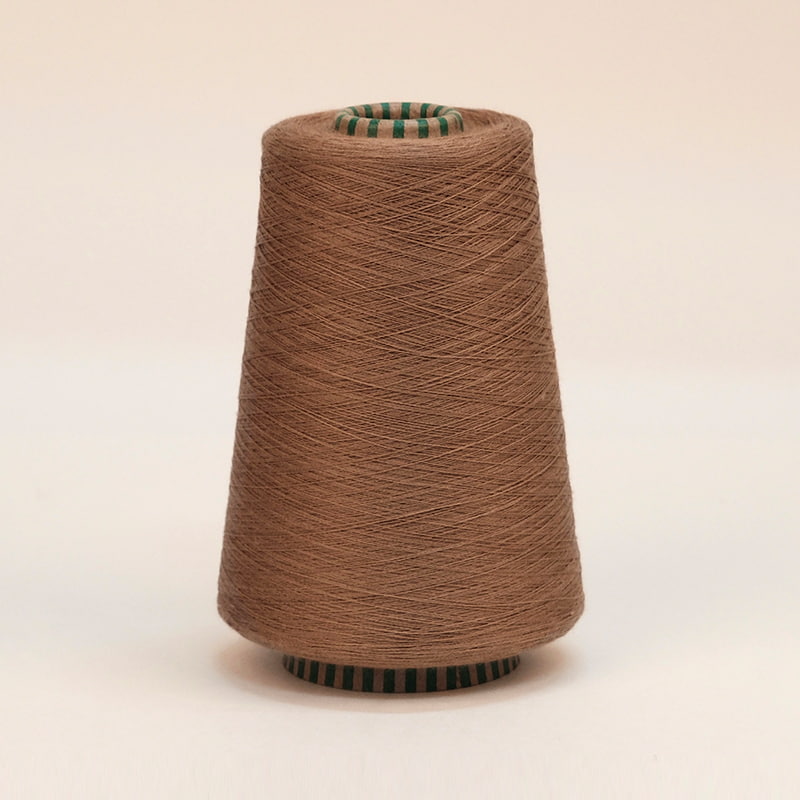
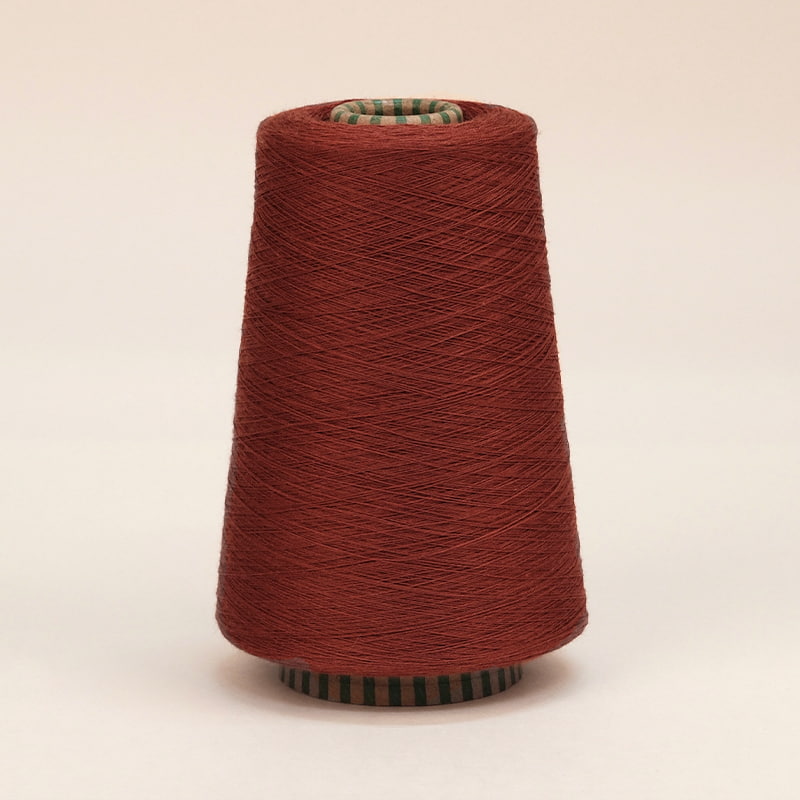 ZEN 70/30 Mercerized Merino Cashmere YarnA 16.5-micron merino and cashmere blend in Nm 2/48 and 3/68, with 45 stock colours for richer drape and sampling.View Product →
For accessory and scarf work, a three-fiber construction often delivers more per gram than a simple two-fiber blend: 60% mercerized merino, 30% silk and 10% cashmere at Nm 2/60 gives luster and strength from the silk, softness from the cashmere, and a price that still fits a premium accessory rather than a luxury hero piece.
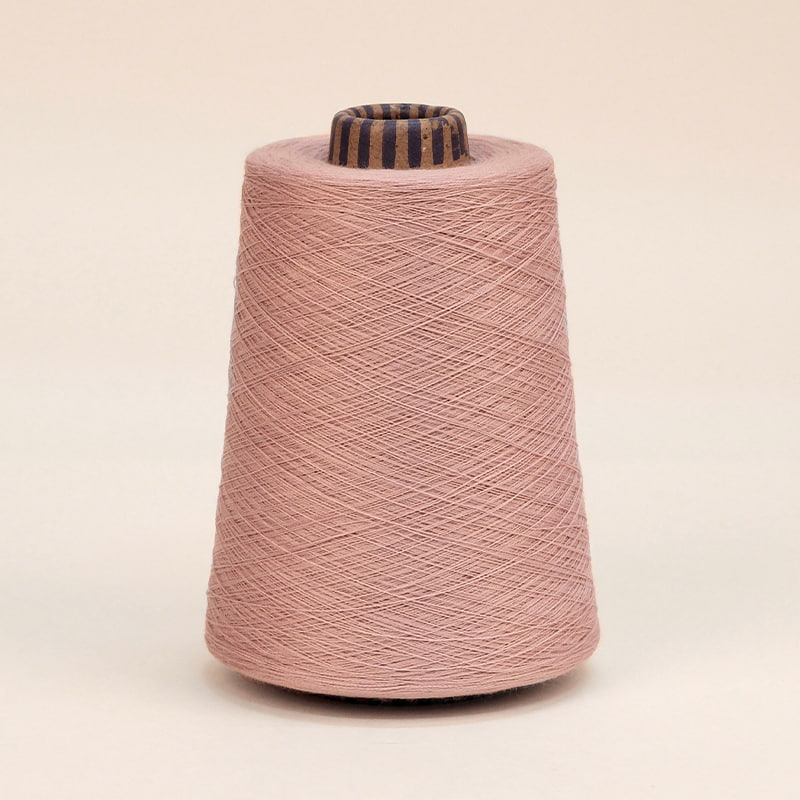 FUSION 60/30/10 Merino Silk Cashmere YarnA Nm 2/60 three-fibre blend combining merino, silk and cashmere for clear texture, shine and softness in premium accessories.View Product →
How to Test the Claim Before You Commit
Blend percentages are easy to print and hard to feel. Before signing off on a 10% program, we suggest a short, practical protocol:
- Request the base fiber's micron value and the yarn count in Nm, not just the blend ratio.
- Knit or weave swatches at the actual gauge you will sell, then wash them three to five times using your care instructions.
- Run a pilling test on the finished swatch; 10% cashmere should not push a knit into a pilling category it was not already in.
- Do a blind hand-feel comparison between the 0%, 10% and 30% versions with people who will actually wear the product.
- Calculate cost per garment, not cost per kilogram, since a small yarn premium can look very different once it is spread across a finished piece.
If the 10% version wins clearly against the 0% version in the blind test and the cost delta stays modest, you have found your tipping point. If the panel cannot tell the difference, the honest move is to drop the cashmere and invest the money in a better base fiber.
So is 10% cashmere worth it? In a fine merino base, at a fine count, destined for something that touches skin, and priced with restraint, yes, it is one of the most efficient upgrades in the whole blend map. It buys a real improvement exactly where customers notice it, without pretending to be something it is not. The trouble only starts when 10% is asked to carry the story of 100%, or when it is used to disguise a base fiber that was never good enough to begin with.
That is the tipping point in practice: the ratio where the money you spend still shows up in the hand. Everything above it is a different conversation about luxury, and everything below it is usually a conversation about labels.